How to Have a Frightfully Fun and Safe Halloween with Your Pet
Halloween season means ghosts, goblins, and ghouls are around every corner. As fake as those frights may be, a real scare would be discovering that your dog ate half the bowl of Halloween candy while your back was turned or bolted from your yard when the neighbor’s 12-foot skeleton shrieked.
Between overflowing candy bowls, elaborate costumes, spooky decorations, and a front door that seems to open every five minutes, Halloween can bring some unexpected risks for dogs and cats. But the last thing you want is to spend your Halloween at the urgent care hospital with a sick or injured pet.
Fortunately, you can avoid most Halloween mishaps with a little preparation. Here’s how to keep the holiday frightfully fun while keeping your pet safely out of trouble.
Keep the candy bowl away from curious noses
Most pets aren’t particularly concerned about whether the candy bowl is meant for them. If it smells good and is within reach, it’s fair game—wrapper and all.
Chocolate is one of the best-known Halloween dangers for pets. Chocolate contains methylxanthines, including theobromine and caffeine, which dogs and cats can’t metabolize as efficiently as people can. Depending on the type and amount eaten and your pet’s size, chocolate ingestion can cause vomiting, diarrhea, restlessness, an elevated heart rate, tremors, seizures, and other serious complications. Any suspected chocolate ingestion is worth taking seriously.
Other common trick-or-treat goodies can pose choking, obstruction, or serious health risks, too, including:
- Sugar-free candies or gum containing xylitol
- Raisins or raisin-containing treats
- Small toys, gadgets, glow sticks, and slime handed out to trick-or-treaters
- Candy wrappers, lollipop sticks, and treat bags
The safest strategy? Keep Halloween candy somewhere your pet truly can’t reach, not just pushed toward the back of the counter.
Choose a cute but comfortable costume
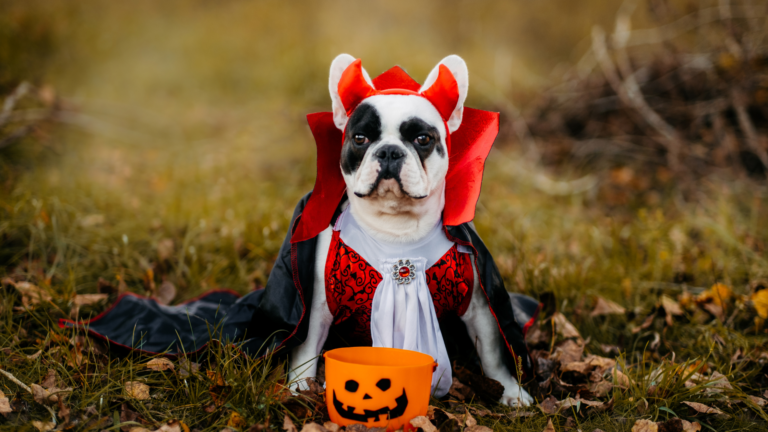
A dachshund dressed like a hot dog? Excellent choice. A cat in a tiny witch hat? Potentially the most adorable thing in the world, assuming the cat agrees, of course. Most importantly, your pet’s costume should never interfere with their ability to breathe, see, hear, walk, or communicate normally. Check for tight elastic, dangling pieces, and small buttons or other accessories that could become chewing or choking hazards.
Once the costume is on, watch your pet’s body language. Freezing in place, repeatedly trying to remove the costume, hiding, panting, vocalizing, or becoming unusually irritable can all indicate that your pet isn’t enjoying their festive attire as much as you are. If your pet hates costumes, skip the full ensemble. A Halloween-themed collar, bandana, or bow can provide plenty of spooky-season spirit without unnecessary stress.
And remember: Never leave a costumed pet unattended.
Beware of creepy decorations
Halloween decorations make for a terror-filled transformation, but in the wrong paws, they can easily look like shiny new toys.
Fake cobwebs, string lights, electrical cords, ribbons, dangling ghosts, plastic spiders, glow sticks, and other decorations may become chewing or swallowing hazards. Cats in particular may be drawn to long, string-like objects. If swallowed, however, string can become a dangerous linear foreign body that damages their gastrointestinal tract.
Candles and jack-o’-lanterns deserve special attention, too. An excited dog’s tail or a curious cat’s paws can easily knock over a lit candle or get too close to an open flame. Battery-operated candles are a much safer way to achieve that spooky flicker; however, even they should be used carefully, as button batteries can cause severe intestinal damage if ingested.
Prevent your pet from escaping
Ding-dong. For pets, Halloween night can mean an unusually busy entryway, allowing for plenty of opportunities to slip outside unnoticed. Even pets who normally have excellent door manners can become frightened or excited by the constant flow of unfamiliar visitors. Consider keeping your pet in a secure room away from the front door during peak trick-or-treating hours. Give them water, a comfortable bed, and a favorite toy or enrichment activity.
Ensure dogs and cats wear properly fitted collars with up-to-date identification tags. Microchipping provides another important layer of protection, so make sure your contact information is up to date. If your pet becomes anxious during Halloween festivities, consider talking with your veterinarian about calming medications to keep them relaxed.
Don’t force your pet to join the party
You know the six-foot inflatable vampire is harmless, or the masked stranger is just your neighbor, but your pet may not. Halloween changes your pet’s familiar environment. People suddenly cast strange shadows, the doorbell won’t stop ringing, and decorations move, flash, and make lots of noise.
Watch for signs of fear or overstimulation, including:
- Hiding or attempting to escape
- Trembling
- Panting or pacing
- Excessive barking or vocalization
- Dilated pupils
- Flattened ears or a tucked tail
- Refusing treats
- Growling, swatting, or other defensive behaviors
Give nervous pets somewhere quiet to retreat rather than forcing them to participate. This is especially important if you’re hosting a Halloween party. Even normally friendly pets can react differently when frightened. Remind children and guests not to chase, corner, hug, or handle a pet who is trying to get away.
Keep adult treats away from pets
The candy bowl isn’t the only source of Halloween mischief. Party foods may contain onions, garlic, fatty meats, bones, or other ingredients that can make pets sick.
Alcohol and cannabis products should always be secured where pets can’t access them. Edibles can be especially concerning because they may contain multiple problematic ingredients at once, such as THC and chocolate. A good Halloween rule is simple: If your pet deserves a treat, give them one made specifically for pets.
When Halloween mischief becomes an urgent care visit
Sometimes, despite your best efforts, pets still manage to find trouble. It’s practically one of their superpowers. Contact a veterinary hospital right away if your pet eats chocolate, candy containing xylitol, grapes or raisins, or another potentially toxic substance.
You should also seek care for symptoms such as
- Repeated vomiting or diarrhea
- Difficulty breathing
- Tremors or seizures
- Extreme lethargy
- Collapse
- Significant abdominal pain
- Choking
- Other sudden or unexplainable abnormal behavior
If your pet eats something questionable, gather as much information as you can. Bring the package or take a photo of the ingredient list, and try to determine approximately what your pet ate, how much they ate, and when it happened. Your veterinary team will use the information along with your pet’s weight and symptoms to determine the safest next steps.
Most importantly, don’t induce vomiting or give at-home remedies unless a veterinarian specifically instructs you to do so. The most appropriate action depends on what your pet swallowed and their individual circumstances.
Have a happy—and uneventful—Halloween!
Halloween is much more fun when the only monsters you encounter are wearing costumes. Keep candy secured, decorations pet-friendly, doors carefully managed, and nervous pets somewhere they feel safe.
And if your dog decides the candy bowl is an opportunity for a personal buffet or your cat turns a decoration into an afternoon snack, don’t spend the evening wondering whether you should be concerned.
Animal Urgent Care of Bentonville is here when your pet needs prompt veterinary attention. Contact us if you’re concerned about your pet or unsure whether they need urgent veterinary care. We’ll help you decide the best next step.